
Ready to reimagine discipline?
From a tough moment in one classroom to a pattern across several, Highfive coaches teachers to respond with care and helps schools support students before they end up in the office.
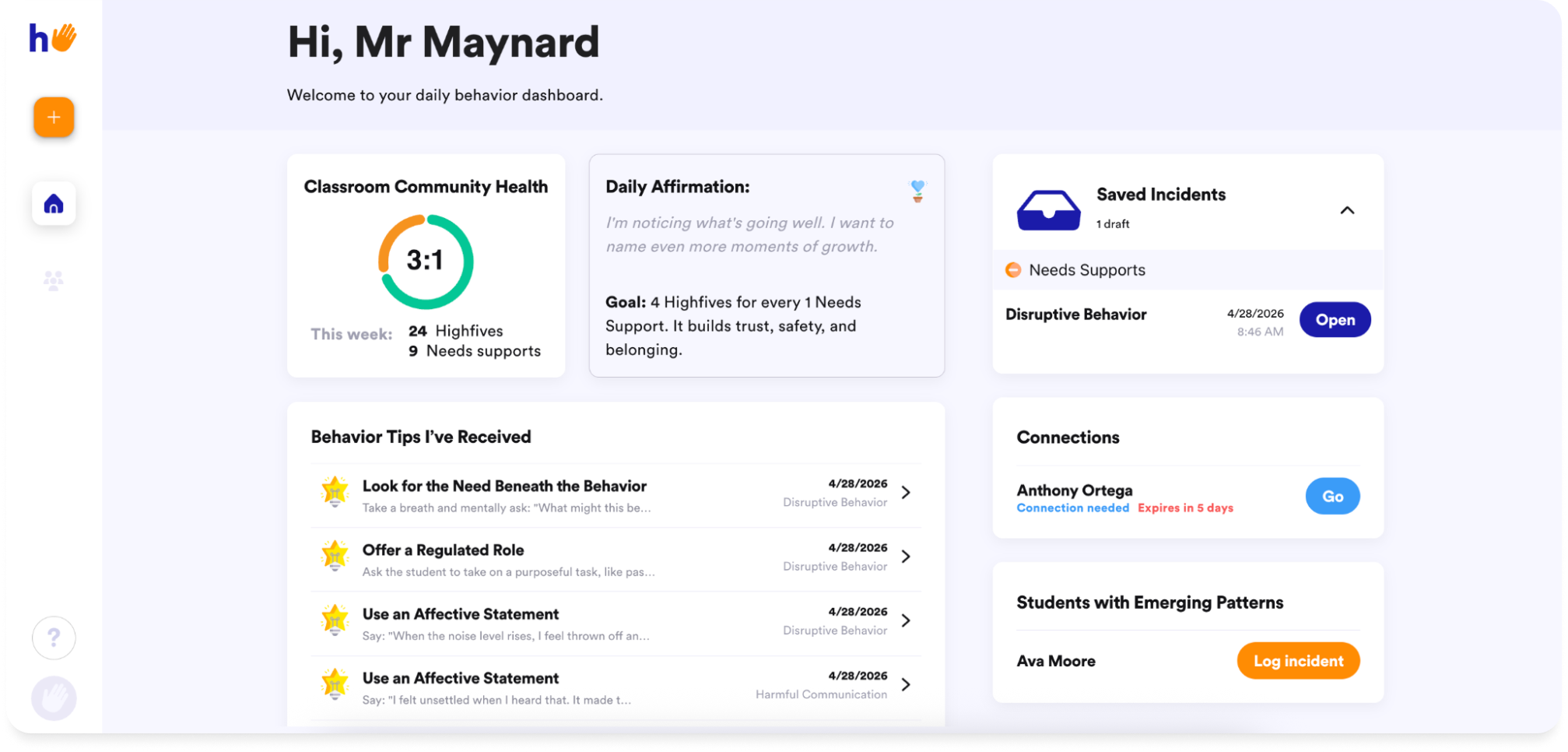
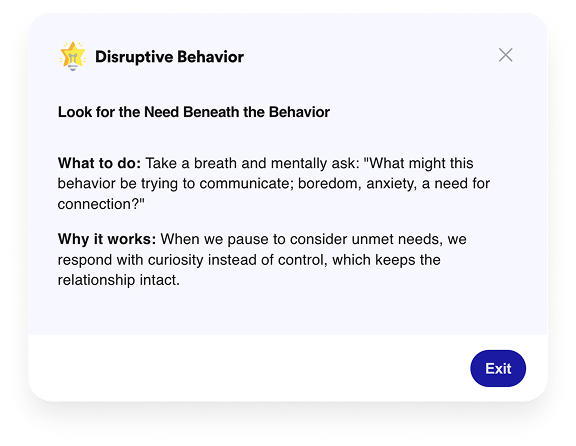
It’s hard to know what to do with classroom behaviors when we’re overwhelmed.
With everything teachers are managing, behavior challenges can be frustrating and make it harder to respond with intention.
Highfive provides the support teachers need.
Highfive provides practical strategies and guidance that help teachers navigate challenging moments with confidence, strengthen relationships, and build a classroom community where students can learn and thrive.
Learn MoreWe try to be clear and consistent but everyone’s doing their own thing.
When behavior definitions, response guidance, and documentation live in different places, consistency is harder—and smaller signs that a student needs support can be easy to miss.
Highfive creates consistency.
Highfive brings clarity and consistency to the systems schools already have, creating a shared approach to behavior while making patterns visible across classrooms before challenges become bigger ones.
Learn More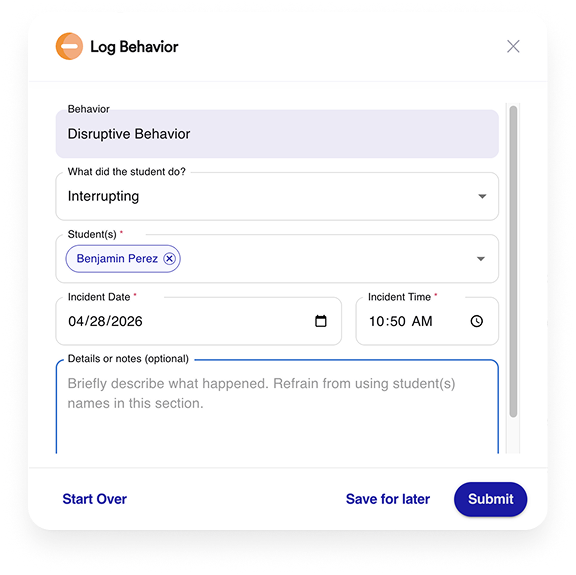
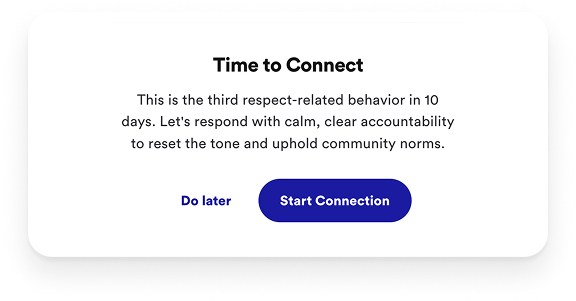
I keep addressing problems when they happen, but nothing is changing.
When each behavior is addressed as an isolated incident, it can be difficult to see the bigger pattern and respond in ways that build meaningful accountability.
Highfive builds accountability.
Highfive helps schools connect patterns to logical, progressive consequences that help students understand the impact of their choices, repair when needed, and make different choices moving forward.
Learn MoreYou can't improve what you can't see.
When classroom activity happens in isolation, leaders can miss emerging student needs and broader patterns across their school.
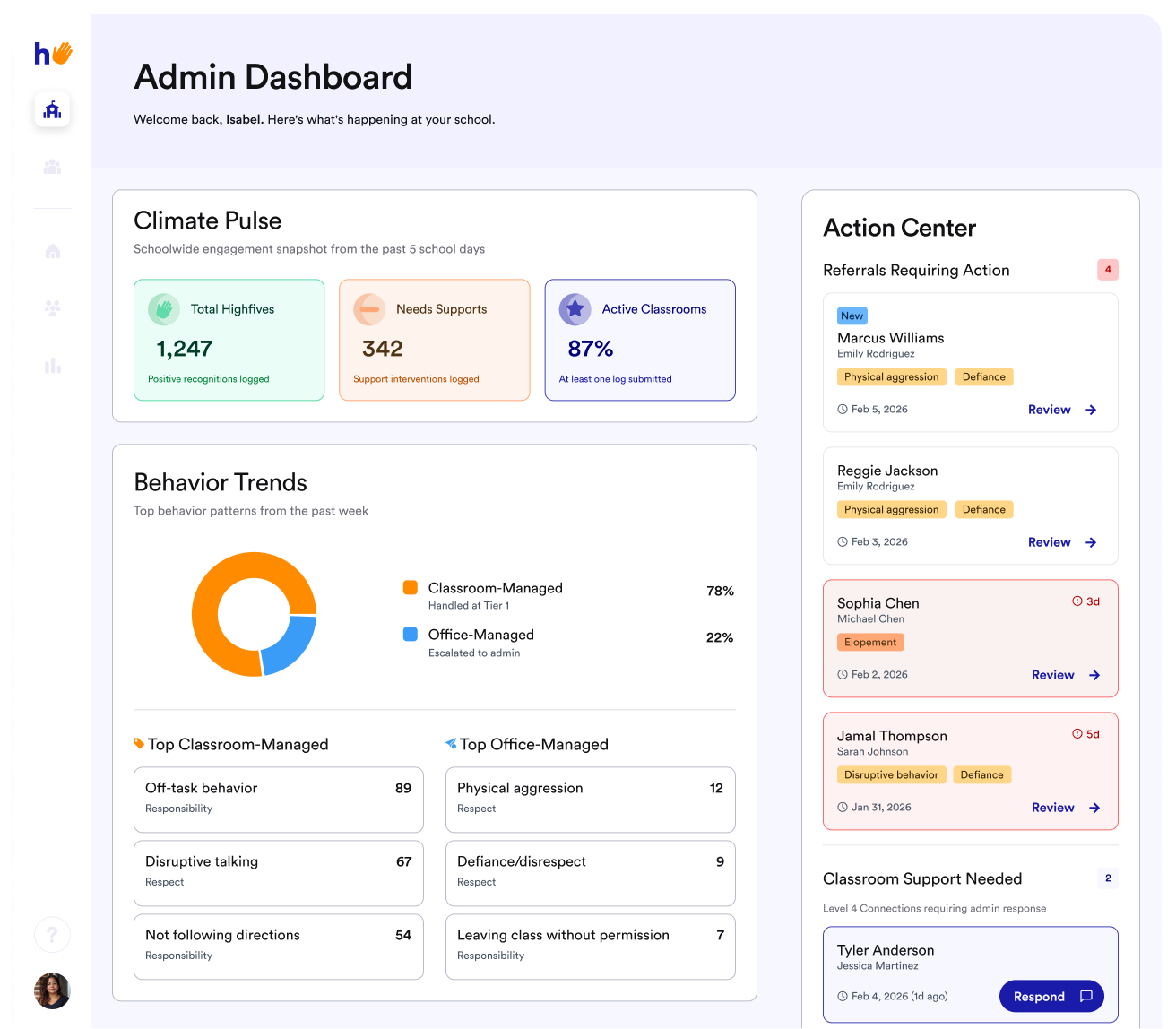
Highfive turns classroom activity into meaningful insight.
Highfive brings everyday classroom activity into view, helping leaders surface needs earlier, strengthen Tier 1 universal supports, and turn meaningful data into action through ongoing school improvement.
Watch demo
See It In Action
Are you ready to reimagine discipline?



From our founder
Why We Built HighFive
"I spent years working with students that the system had written off. The tools we had made it easier to punish kids than to reach them — and I knew we could build something better."
Nathan Maynard is a youth advocate, author of Hacking School Discipline and The Science of Discipline, and the founder of HighFive. He started this company after a decade in K-12 to give educators a better way to support the students who need them most.
Read Nathan's full story →
Real results for real communities.
Results from an approach firmly rooted in pioneering research, evidence-based methods and over a hundred years of collective education experience.
What our customers are saying.
Builds relationships
Highfive helps build relationships, foster a safe environment, and gives students the tools to be successful members of society.

Builds relationships
Highfive helps build relationships, foster a safe environment, and gives students the tools to be successful members of society.
Teaches a new way
We couldn’t do what we do the way we get to do it without Highfive!

Flips tradition
This is a flip on the traditional approach to discipline, focusing on the intrinsic ability of young people to learn and overcome difficulties


Effective discipline builds community.
Reduction in Suspensions and Expulsions
In Denver Public Schools, restorative practices led to a 45% reduction in out-of-school suspensions. This approach particularly benefited Black students and students with disabilities, with a 77% and 79% reduction in suspensions, respectively.
Decrease in Violent Incidents
The Oakland Unified School District saw a 40% decrease in violent incidents over five years after implementing restorative practices.
Increased Student Engagement and Academic Performance
Restorative practices are linked to increased student engagement and academic performance. In some schools, academic performance improved by 28% alongside a reduction in violent incidents.

We have found that it takes educators less than 3 minutes to do classwide check-ins. Over time, it creates more instructional time to do what teachers do - teach!
Absolutely. This has been designed based on our co-founders' research on creating healthy ecosystems in classrooms, schools, and districts. It helps us create a common language and consistency around supporting all students.
We provide you the data to make discipline decisions fast with live actionable data as teachers learn best practices.